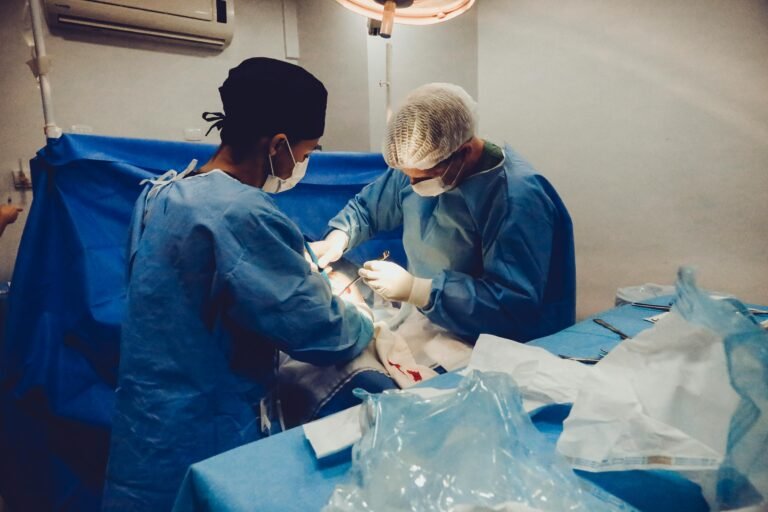
Myringoplasty recovery is the period during which the repaired eardrum and graft are allowed to heal and become established.
The operation itself is only one part of treatment. What happens during the following days and weeks can also be important because the reconstructed eardrum needs protection while healing takes place.
It is common for the operated ear to feel blocked initially. Hearing may seem reduced while packing remains inside the ear, and some patients notice pressure, popping, crackling or unusual sensations during the early stages of recovery.
Recovery advice varies according to the operation, surgical approach and individual ear. Instructions provided by your own surgeon should therefore always take priority over general information online.
The first 24 hours after myringoplasty
Some myringoplasty procedures are performed as day-case surgery, meaning you may be able to return home on the same day if your surgical team is satisfied with your recovery.
Depending on the operation and anaesthetic, you may feel tired, slightly unsteady or uncomfortable around the ear initially. Pain relief can be used according to the instructions provided by your treatment team.
Packing may have been placed inside the ear canal to support the reconstruction. A dressing or bandage may also have been used.
If you have had a general anaesthetic or sedation, there may also be temporary restrictions relating to driving, operating machinery, alcohol and important decision-making.
What might you notice during the first week?
The ear does not normally feel completely normal immediately after surgery.
During the early recovery period you may notice:
- a blocked or full sensation in the operated ear
- temporarily reduced hearing
- popping, crackling or clicking sensations
- mild discomfort or tenderness
- a small amount of blood-stained or watery discharge
- tiredness following surgery or anaesthesia
These experiences can occur during normal recovery, particularly while packing is still present.
However, symptoms that become severe, rapidly worsen or appear inconsistent with the advice provided by your surgical team should be medically reviewed.
Ear packing and temporary blocked hearing
Ear packing is commonly used after myringoplasty. It can help support the healing tissues and reconstruction during the early post-operative period.
Some packing dissolves gradually. Other types may need to be removed during a follow-up appointment.
Because the ear canal may be partly or completely filled, hearing can initially seem worse than it did before surgery.
“Why can I hear less after surgery?”
Reduced hearing in the early stages does not necessarily indicate that the reconstruction has failed. Packing, swelling and the healing process can all temporarily affect sound transmission.
When does hearing improve after myringoplasty?
Hearing should not normally be judged immediately after the operation.
The ear needs time to heal, packing needs to dissolve or be removed, and swelling within the ear needs to settle before a meaningful hearing assessment can be made.
Where conductive hearing loss was caused partly by the perforation, hearing may improve following successful repair.
However, hearing outcome also depends on the condition of the hearing bones, middle ear and inner ear. Improvement therefore cannot be guaranteed.
Keeping the ear dry after eardrum repair
Water precautions are an important part of recovery after myringoplasty.
The reconstructed eardrum needs time to heal. Water entering the ear canal during this period may interfere with recovery or increase the risk of infection.
Showering and hair washing
Your surgical team may advise protecting the outer ear with cotton wool coated in petroleum jelly when washing your hair or showering.
Wait for surgical clearance
Swimming or putting the head underwater should generally wait until the surgeon confirms that the reconstructed eardrum has healed sufficiently.
NHS guidance following ear surgery emphasises keeping the operated ear dry and waiting for surgical advice before swimming or immersing the ear.
Read NHS postoperative ear surgery guidanceNose blowing, sneezing and pressure changes
The middle ear is connected to the back of the nose by the Eustachian tube. Significant pressure generated in the nose can therefore be transmitted towards the healing middle ear.
Many postoperative instructions advise avoiding forceful nose blowing during the early healing period.
If you need to sneeze, your surgical team may advise doing so with your mouth open to help reduce pressure.
When can you return to work after myringoplasty?
There is no single return-to-work date that applies to every patient.
Some NHS patient information suggests that many people return after approximately one to two weeks, but the appropriate period depends on the operation, how you feel and the nature of your job.
Someone working at a desk may be able to return sooner than a person whose job involves heavy lifting, strenuous physical activity, dust, water exposure or significant pressure changes.
Return depends on comfort, fatigue and your surgeon’s advice.
More time may be needed where lifting or exertion cannot be avoided.
Dizziness, hearing requirements or medication may affect when work can safely resume.
Exercise after myringoplasty
Gentle activity can usually be increased gradually as you recover, but strenuous exertion is commonly restricted during the early healing period.
Heavy lifting, high-intensity exercise and contact sports can increase pressure or expose the healing ear to trauma.
Different NHS services give different timeframes for returning to exercise, which is one reason individual postoperative advice should be followed rather than relying on a fixed online rule.
When can you fly after myringoplasty?
Flying with an untreated perforated eardrum is generally regarded differently from flying after surgical eardrum repair.
After myringoplasty, the graft needs to heal and significant pressure changes may affect the operated middle ear.
NHS postoperative guidance therefore advises patients not to fly until their surgeon says it is safe.
Flying restrictions vary between surgical services.
Different NHS hospitals publish different minimum periods following myringoplasty. Your own surgeon’s advice should therefore determine when you fly.
This is particularly important when planning holidays or work travel soon after surgery.
NHS guidance on perforated eardrums and flyingWhy are follow-up appointments important?
Recovery after myringoplasty is assessed over time rather than on the day of surgery.
Follow-up allows the surgical team to examine how the eardrum is healing, review any packing and decide when activities such as swimming, flying or returning to more strenuous exercise can safely resume.
Early postoperative review
The ear and any wound can be checked and packing reviewed where appropriate.
Eardrum healing
The reconstructed tympanic membrane is examined to assess how the graft is healing.
Hearing review
Hearing may be retested after sufficient healing has taken place.
Longer-term advice
Water exposure, flying, exercise and other activities can be discussed according to the individual result.
When should you seek medical advice after ear surgery?
Some discomfort, blockage and mild discharge can occur during routine recovery. However, unexpected or worsening symptoms need appropriate assessment.
- pain that becomes significantly worse rather than improving
- increasing redness, swelling or signs of wound infection
- heavy or persistent ear discharge
- significant or persistent dizziness
- a marked unexpected change in hearing
- facial weakness
- fever or feeling significantly unwell
- any symptom your postoperative instructions identify as requiring urgent review
For severe or rapidly developing symptoms, seek urgent medical care rather than waiting for a routine follow-up appointment.
A practical myringoplasty recovery timeline
The following is a broad guide to how recovery may progress. It is deliberately not a substitute for the timetable provided by your own surgeon.
Rest and protect the ear
Packing, blockage and some discomfort are expected. Follow discharge and anaesthetic instructions.
Keep the ear dry
Avoid interfering with the packing and follow pressure, bathing and activity precautions.
Healing is reviewed
Packing may dissolve or be removed and the reconstructed eardrum can be examined.
Assess the final result
Hearing and eardrum healing can be assessed once the ear has had sufficient time to recover.
Myringoplasty recovery FAQs
Is it normal for my hearing to feel worse after myringoplasty?
Hearing can temporarily seem reduced because of packing, swelling and the healing process. Hearing should normally be assessed after the ear has had sufficient time to heal.
How long should I keep my ear dry?
Keep the ear dry for the period advised by your surgical team. Swimming and immersion should wait until the surgeon confirms that healing is satisfactory.
When can I wash my hair?
Hair washing may be possible while protecting the operated ear from water. Follow the specific method and timeframe provided by your surgical team.
When can I return to work after myringoplasty?
Return to work varies according to the operation, your recovery and your occupation. Some patients may return within one or two weeks, while physically demanding work can require longer.
When can I exercise after eardrum repair?
Gentle activity is usually resumed before strenuous exercise. Heavy lifting, high-intensity exercise and contact sports should wait until your surgeon considers them safe.
How soon can I fly after myringoplasty?
Do not fly until your surgeon says it is safe. Published postoperative timeframes vary, so your own surgical instructions should determine when air travel resumes.
When will I know whether the graft has worked?
The graft is assessed during follow-up as the ear heals. The final result should not normally be judged immediately after surgery.
Independent NHS information
General postoperative information is available from NHS organisations. Exact instructions can vary, so always follow the advice provided by your own surgical team.
This article provides general patient information and does not replace individual postoperative instructions, medical assessment or treatment. Recovery advice varies according to the procedure and individual patient. Follow the instructions given by your own surgeon and seek appropriate medical advice if you develop concerning symptoms.
Discuss myringoplasty with a specialist ear surgeon
If you have a persistent tympanic membrane perforation, recurrent ear problems or hearing difficulty, specialist assessment can establish whether observation or surgical repair is appropriate.
This page is for general information only and does not replace individual medical assessment, diagnosis or treatment. Seek prompt medical advice for sudden hearing loss or other urgent symptoms.