Endoscopic Ear Surgery in London
Specialist endoscopic ear surgery with Mr Max Whittaker, Consultant ENT Surgeon specialising in otology, hearing loss and chronic ear disease.
An endoscope can provide a detailed view of the eardrum and middle ear through the ear canal. The technique may be useful for selected conditions, but it is not automatically the best approach for every patient.

A minimally invasive viewing approach that may be used for selected middle-ear procedures.
What is endoscopic ear surgery?
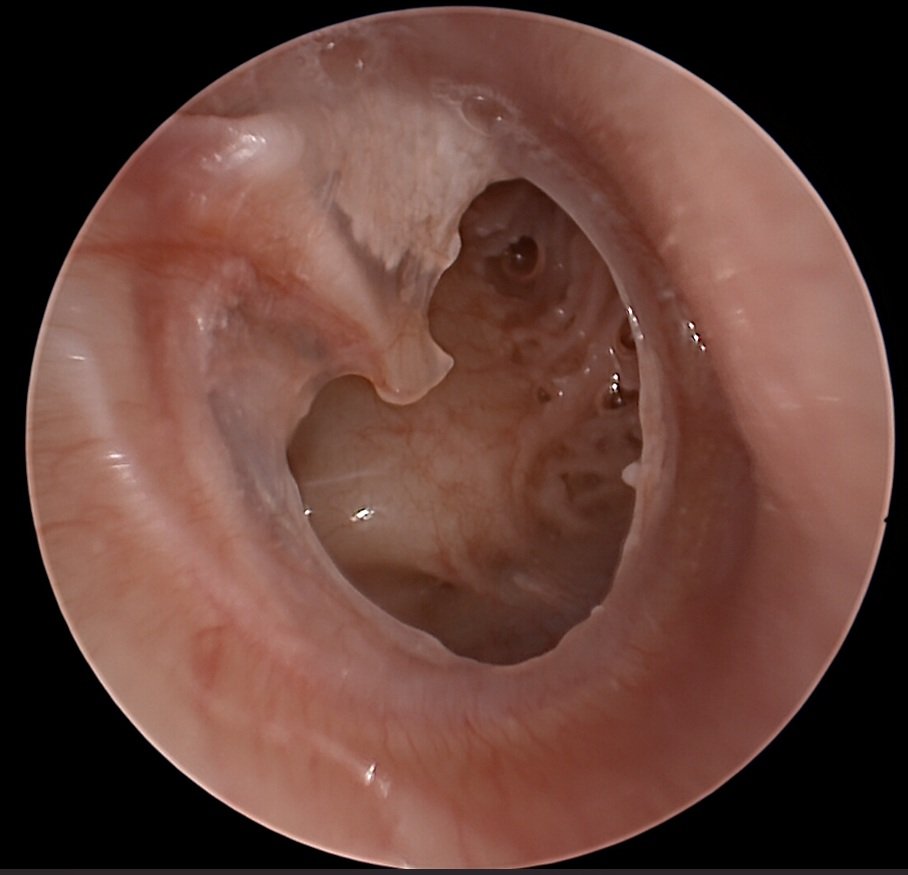
Endoscopic ear surgery uses a small camera placed through the ear canal to visualise the eardrum and middle ear.
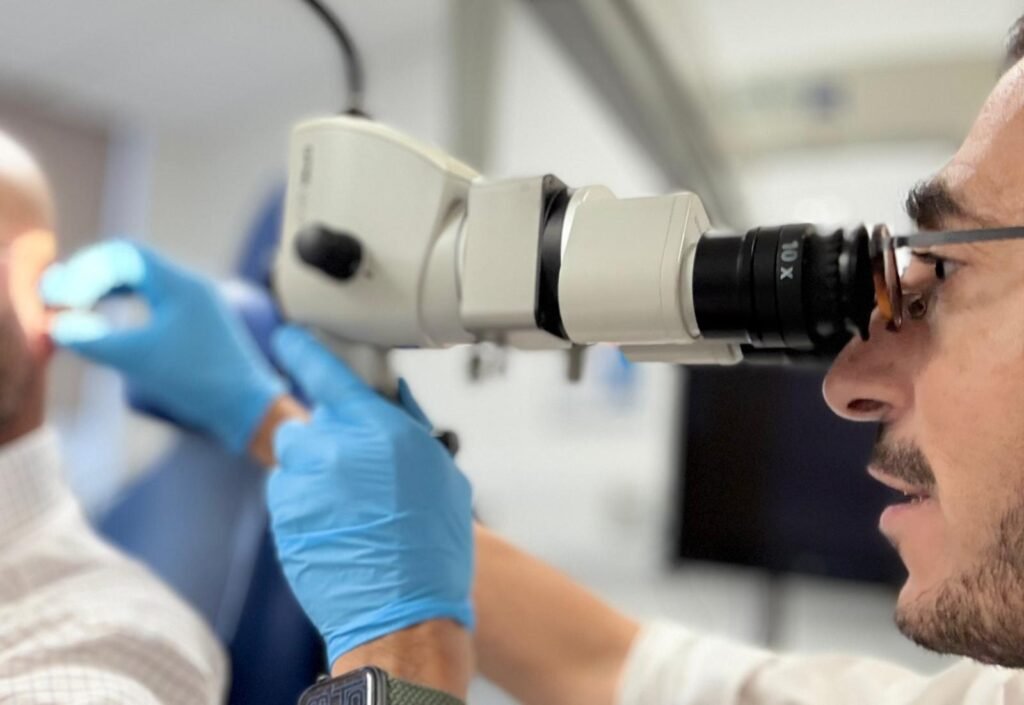
Traditional ear surgery often uses an operating microscope. The microscope remains an important tool, but its view is generally along a straight line.
An endoscope can provide a wide-angle view and can be angled to look around structures within the middle ear. That may improve visual access to areas that can be difficult to see directly with a microscope.
Endoscopic surgery does not replace microscopic surgery. Some procedures are suitable for an endoscopic approach, while others are better performed microscopically or using both techniques together.
Why might an endoscope be useful?
Potential benefits depend on the operation and the individual ear. They should not be interpreted as a guarantee of a better outcome.
Wide-angle view
The endoscope can provide a broad view of the tympanic membrane and middle-ear structures.
Angled visualisation
Angled endoscopes may allow the surgeon to inspect areas that are difficult to see directly.
Ear-canal access
Selected procedures may be performed through the natural ear canal rather than requiring wider external access.
Detailed inspection
Endoscopic visualisation can assist inspection of recesses within the middle ear.
Complementary technique
The endoscope can complement microscopic surgery rather than replacing it.
Individualised surgery
The approach can be selected according to the anatomy, disease and objectives of the operation.
When may endoscopic techniques be considered?
The decision depends on the location and extent of disease, the anatomy of the ear canal and whether additional surgery is required.
Eardrum repair
Some tympanic membrane perforations can be repaired using an endoscopic approach.
Eardrum Repair →Myringoplasty
Endoscopic visualisation may be useful during selected myringoplasty procedures.
Myringoplasty →Selected middle-ear disease
Certain conditions within the middle ear may benefit from the viewing angles provided by an endoscope.
Selected cholesteatoma surgery
Endoscopic techniques may assist treatment or inspection in selected cholesteatoma cases, sometimes alongside microscopic or mastoid surgery.
Mastoid Surgery →Endoscopic surgery is not suitable for every ear
The objective is not to use the smallest approach at all costs. The priority is to choose the safest and most appropriate surgical access for the condition.
Some disease extends beyond areas that can be treated effectively through the ear canal alone.
Other procedures may require two-handed microscopic surgery, mastoid access or reconstruction that is better performed using a different technique.
For that reason, the final approach may be endoscopic, microscopic or a combination of both.
Endoscopic, microscopic or combined surgery
Camera-based view
An endoscope provides a wide-angle image and can be angled to inspect areas within the middle ear.
- Through-ear-canal visualisation
- Wide and angled views
- Useful in selected procedures
Operating microscope
Microscopic ear surgery provides magnified binocular vision and allows both hands to be used during the procedure.
- Established ear-surgery technique
- Two-handed operating
- Appropriate for many procedures
Use both techniques
In some operations, the best approach is to use the microscope for part of the procedure and the endoscope for additional visualisation.
- Flexible surgical planning
- Different views when required
- Technique tailored to disease
Assessment determines the surgical approach
Whether an endoscopic technique is appropriate can only be determined after understanding the condition and anatomy of the individual ear.
Symptoms and history
Hearing problems, infection, discharge, previous operations and current symptoms are reviewed.
Ear examination
The ear canal, eardrum and visible middle-ear structures are examined.
Hearing assessment
Audiology may be required to understand the type and degree of hearing loss.
Surgical planning
The endoscopic, microscopic or combined approach can then be discussed according to the clinical findings.
Recovery depends on the operation performed
The use of an endoscope does not by itself determine recovery time. Recovery depends on the underlying condition, procedure, reconstruction and individual healing.
Patient InformationKeep the ear dry
Water precautions may be required while the ear heals.
Attend postoperative review
Follow-up allows healing and the result of the procedure to be assessed.
Follow activity guidance
Work, exercise and other activities should be resumed according to the instructions given for your operation.
Ask before flying
If the operation involved eardrum or middle-ear reconstruction, follow your surgeon’s advice before flying.

Specialist training in endoscopic ear surgery
Mr Max Whittaker has a specialist interest in otology, chronic ear disease, hearing loss and minimally invasive endoscopic ear surgery.
His advanced training in Otology and Skull Base Surgery was undertaken at Guy’s and St Thomas’, alongside international observerships at the House Institute in California and Toronto General Hospital.
Those observerships included a particular focus on endoscopic ear surgery. Mr Whittaker also holds an MSc with Distinction in Audiovestibular Medicine from UCL.
From assessment to surgical planning
Book your consultation
Submit a secure consultation request and indicate your preferred clinic.
Request consultation →Examine the ear
The ear canal, eardrum and middle ear are assessed together with your symptoms and history.
Define the clinical problem
Hearing tests and other investigations may be considered where clinically appropriate.
Choose the appropriate approach
Endoscopic, microscopic or combined surgery can be discussed according to the individual findings.
Common questions about endoscopic ear surgery
Suitability depends on the individual condition and cannot be established from general information alone.
Endoscopic ear surgery uses a small camera inserted through the ear canal to provide a wide-angle view of the eardrum and middle-ear structures.
No. Both techniques have advantages and limitations. The appropriate approach depends on the disease, anatomy and operation required.
Selected myringoplasty procedures can be performed using endoscopic techniques. Other ears may be better suited to a microscopic or combined approach.
Not necessarily. Recovery is influenced by the condition treated, the extent of the procedure, reconstruction performed and individual healing.
Endoscopic techniques may be useful in selected cholesteatoma cases, but more extensive disease can require microscopic, mastoid or combined approaches.
Use the secure Book Consultation page to request an appointment with Mr Max Whittaker. The clinic team will contact you to confirm the appointment.
Find out which surgical approach is appropriate
Request a consultation with Mr Max Whittaker for an individual assessment and discussion of endoscopic, microscopic or combined ear surgery.