Eardrum Repair in London
Specialist assessment and treatment for a persistent perforated eardrum with Mr Max Whittaker, Consultant ENT Surgeon specialising in otology and ear surgery.
Many eardrum perforations heal naturally. Where a perforation remains open, affects hearing or is associated with recurrent infection or discharge, specialist assessment can help determine whether surgical repair may be appropriate.

Assessment, hearing evaluation and reconstructive treatment where clinically appropriate.
What is a perforated eardrum?
A perforated eardrum is an opening in the tympanic membrane, the thin tissue separating the ear canal from the middle ear.
Perforations can develop following infection, injury, pressure-related trauma or previous ear surgery.
The effect varies considerably. Some people have few symptoms, while others experience reduced hearing, recurrent discharge, infection or difficulty keeping the ear dry.
NHS guidance states that many perforated eardrums heal naturally, commonly within around two months. A perforation that remains open may justify specialist review.
When might eardrum repair be considered?
Surgery is not required simply because a perforation exists. The decision depends on symptoms, hearing, infection and the condition of the middle ear.
Persistent perforation
The tympanic membrane remains open rather than healing naturally over time.
Hearing loss
The perforation or associated middle-ear problem contributes to conductive hearing difficulty.
Recurrent discharge
The ear repeatedly becomes wet or discharges, particularly following infection.
Recurrent infection
Water or infection repeatedly enters the middle ear through the perforation.
Lifestyle impact
Keeping the ear dry or managing repeated symptoms significantly affects everyday activities.
Associated ear disease
Examination identifies another middle-ear problem that also requires consideration.
Specialist assessment before eardrum surgery
The size of the hole alone does not determine the correct treatment. Hearing, infection history, previous surgery and the condition of the middle ear also matter.
Clinical history
Symptoms, previous infections, water exposure, trauma and earlier ear surgery can be reviewed.
Ear examination
The perforation and surrounding tympanic membrane are examined along with the ear canal and visible middle-ear structures.
Hearing assessment
Audiology may help establish how much of the hearing loss is conductive and whether another component is present.
Treatment discussion
Observation, medical management or surgical reconstruction can then be discussed according to the findings.
How can the eardrum be repaired?
Different operative approaches may be appropriate depending on the location of the perforation, ear-canal anatomy and whether additional disease needs treatment.
Through the ear canal
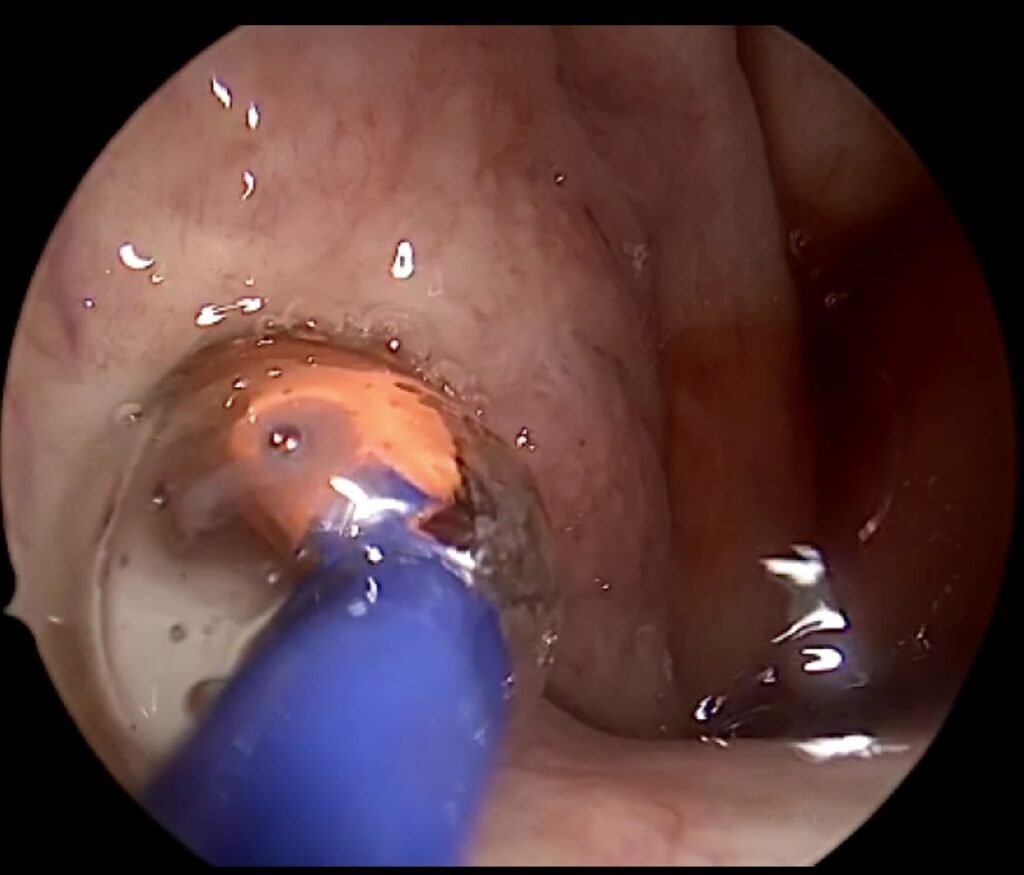
An endoscope may provide direct and angled views of the tympanic membrane and middle ear in selected cases.
Endoscopic Ear Surgery →Magnified surgical view
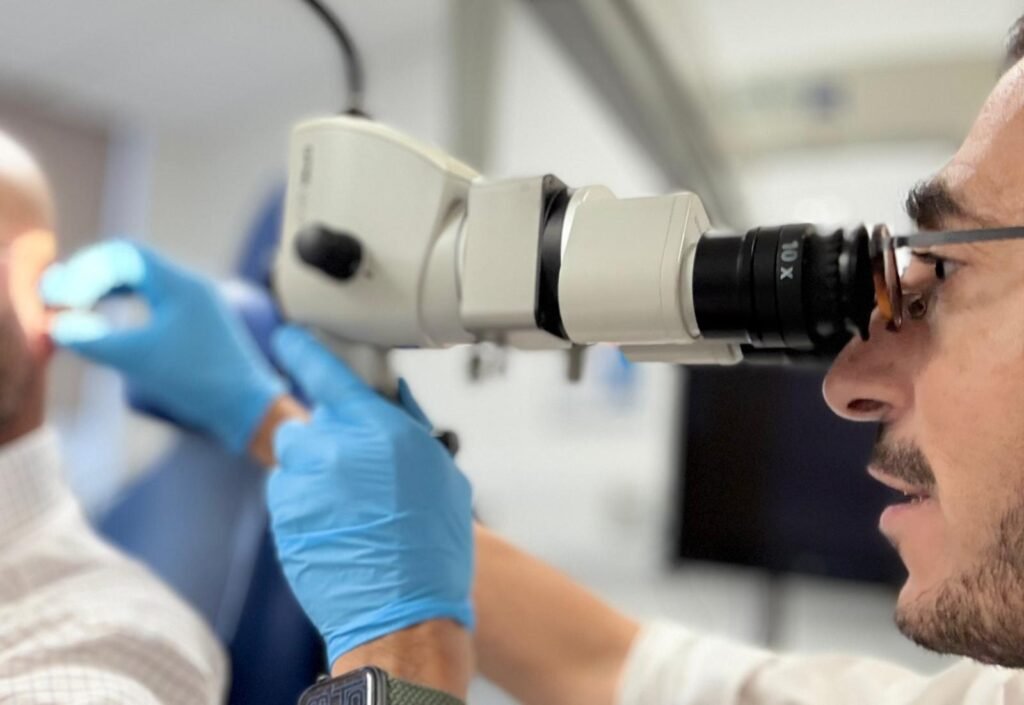
Microscopic ear surgery remains appropriate for many procedures and may offer advantages where two-handed access is required.
Individualised approach
Endoscopic and microscopic methods can be combined when doing so provides the best access to the clinical problem.
Recovery after eardrum repair
Recovery instructions depend on the procedure, surgical approach and individual ear. Your own postoperative instructions should take priority over general online information.
Read Patient GuidesKeep the ear protected
Patients are usually advised to keep the operated ear dry while the graft heals.
Attend follow-up
The ear needs review so healing and the position of the graft can be assessed.
Follow activity advice
Your surgical team will advise when work, exercise and other normal activities can resume.
Ask before flying
Flying restrictions after eardrum repair vary. Do not fly until your own surgical team says that it is safe.

Specialist expertise in otology and eardrum surgery
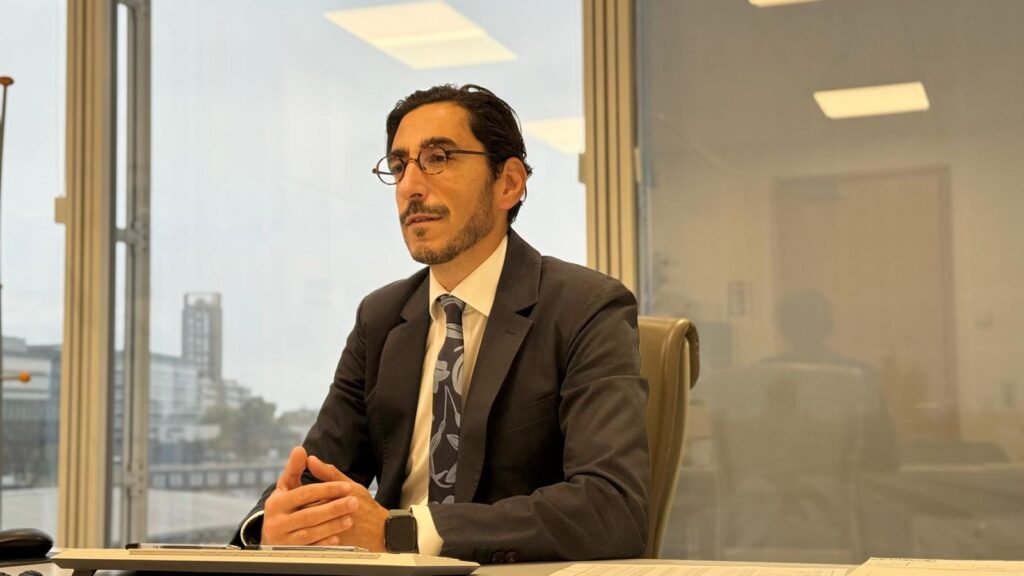
Mr Max Whittaker specialises in otology, chronic ear disease, hearing loss and minimally invasive endoscopic ear surgery.
His specialist training includes advanced Otology and Skull Base Surgery at Guy’s and St Thomas’ and international observerships at the House Institute in California and Toronto General Hospital.
Mr Whittaker also holds an MSc with Distinction in Audiovestibular Medicine from University College London and is Clinical Lead in Otolaryngology at Homerton Healthcare NHS Foundation Trust.
From perforation assessment to treatment planning
Book your consultation
Submit a secure appointment request and choose your preferred clinic location.
Request consultation →Examine the perforation
The eardrum, ear canal and visible middle ear are assessed together with your symptoms and history.
Understand hearing function
Hearing tests may help identify the type and degree of hearing loss.
Discuss whether repair is appropriate
Observation, medical management or surgical repair can be discussed according to the individual findings.
Common questions about repairing a perforated eardrum
These answers provide general information. Advice about an individual ear requires clinical assessment.
No. Many perforations heal naturally. Specialist assessment becomes more relevant where the perforation remains open or causes ongoing hearing, infection or discharge problems.
Myringoplasty generally describes repair of the eardrum itself. Tympanoplasty can include additional reconstruction or treatment within the middle ear.
Repairing the tympanic membrane can improve sound transmission in some patients, but hearing outcome depends on several factors, including the condition of the middle ear, ossicles and inner ear. Normal hearing cannot be guaranteed.
No. Endoscopic surgery may be appropriate in selected cases. Microscopic or combined approaches may be more suitable for other ears.
Not until your own surgical team confirms that it is safe. Postoperative flying restrictions vary depending on the procedure and healing.
Use the secure Book Consultation page to request an appointment with Mr Max Whittaker. The clinic team will contact you to confirm the appointment.
Arrange a specialist eardrum assessment
Request a private consultation with Mr Max Whittaker to discuss your perforation, hearing and whether eardrum repair may be appropriate.