
What Endoscopic Ear Surgery Involves

Introduction
Endoscopic ear surgery is regarded as a transformative development in modern otology. Patients are offered less invasive treatment options for conditions such as eardrum perforation, cholesteatoma, and otosclerosis. While the microscopic technique has long been considered the gold standard, the introduction of high-definition endoscopes has opened new possibilities. Surgeons can now operate with greater visibility and precision, transforming the approach to ear surgery.
The Principles Behind Endoscopic Ear Surgery
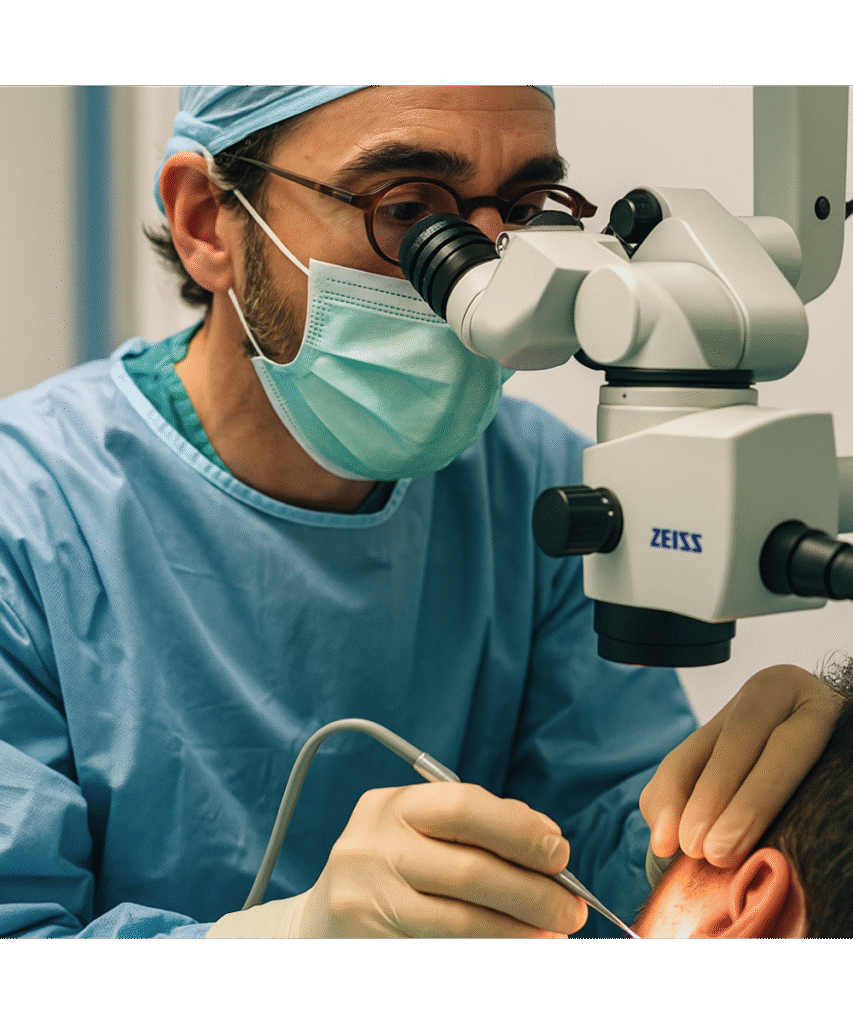
The procedure is based on the use of a slender, rod-shaped endoscope that is introduced directly into the ear canal. The device is connected to a high-resolution camera and light source, which provide a magnified, panoramic view of the middle ear. Unlike the microscope, which restricts vision to a straight line, the endoscope allows views “around corners” and into recesses that were previously difficult to access, such as the middle ear (sinus tympani).
During the procedure, the surgeon holds the endoscope in one hand while instruments are used in the other. This one-handed technique requires specific training and dexterity, but excellent outcomes have been reported once the method is mastered.

The Patient Journey
Most endoscopic ear procedures are carried out under general anaesthesia. Patients are usually admitted on the day of surgery and undergo a short pre-operative check. Once in the operating theatre, the ear canal is carefully prepared before the endoscope is placed. The following operations are commonly performed using this technique:
Most procedures last one to two hours, and many patients are discharged the same day.
Advantages for Patients and Surgeons
Surgeons are provided with enhanced visualisation of the middle ear, which often allows more complete clearance of disease, particularly in cases of cholesteatoma. Patients benefit from fewer or no external scars, reduced post-operative discomfort, and quicker recovery.
Limitations
Not all cases are suitable for an endoscopic approach. Very extensive disease, narrow ear canals, or complex revision surgery may still require a microscopic method. In addition, the one-handed technique is technically demanding for certain reconstructions.
Conclusion
Endoscopic ear surgery is increasingly recognised as a safe and effective technique that improves both surgical precision and the patient experience. For carefully selected cases, this minimally invasive approach provides a balance of advanced technology and favourable recovery.